About
Meet Mark
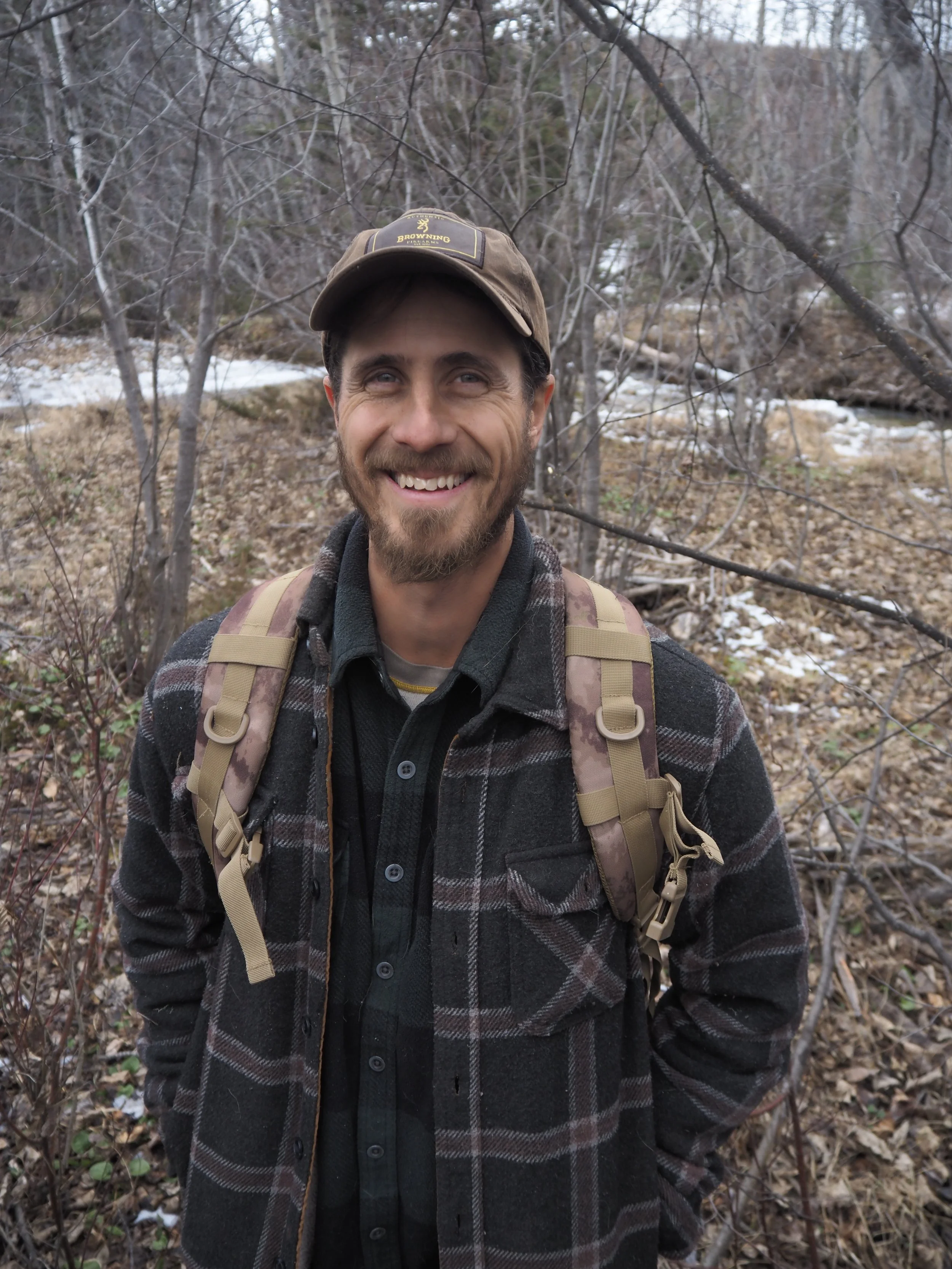
Wildlife tracker, ecologist, mapmaker, restoration specialist, photographer, & naturalist
For the past 20+ years, I’ve dedicated myself to the study of the natural world and the sharing of that accumulated knowledge with teaching, wilderness guiding, science communication, and mapmaking.
Cambium Ecological, based in the Greater Yellowstone Ecosystem, is the venue to distill my lifetime of discoveries and help inspire others to observe, understand, and ultimately conserve our natural world.
By promoting ecoliteracy, the practice of reading the landscape, I hope to equip others with the skills needed to steward our lands and waters toward greater diversity and abundance, and to enrich our lives through meaningful engagement with wild places.
Outside of work, I spend my time hunting, flint knapping, bow building, spoon carving, songwriting, taking photographs, and tracking wild animals.
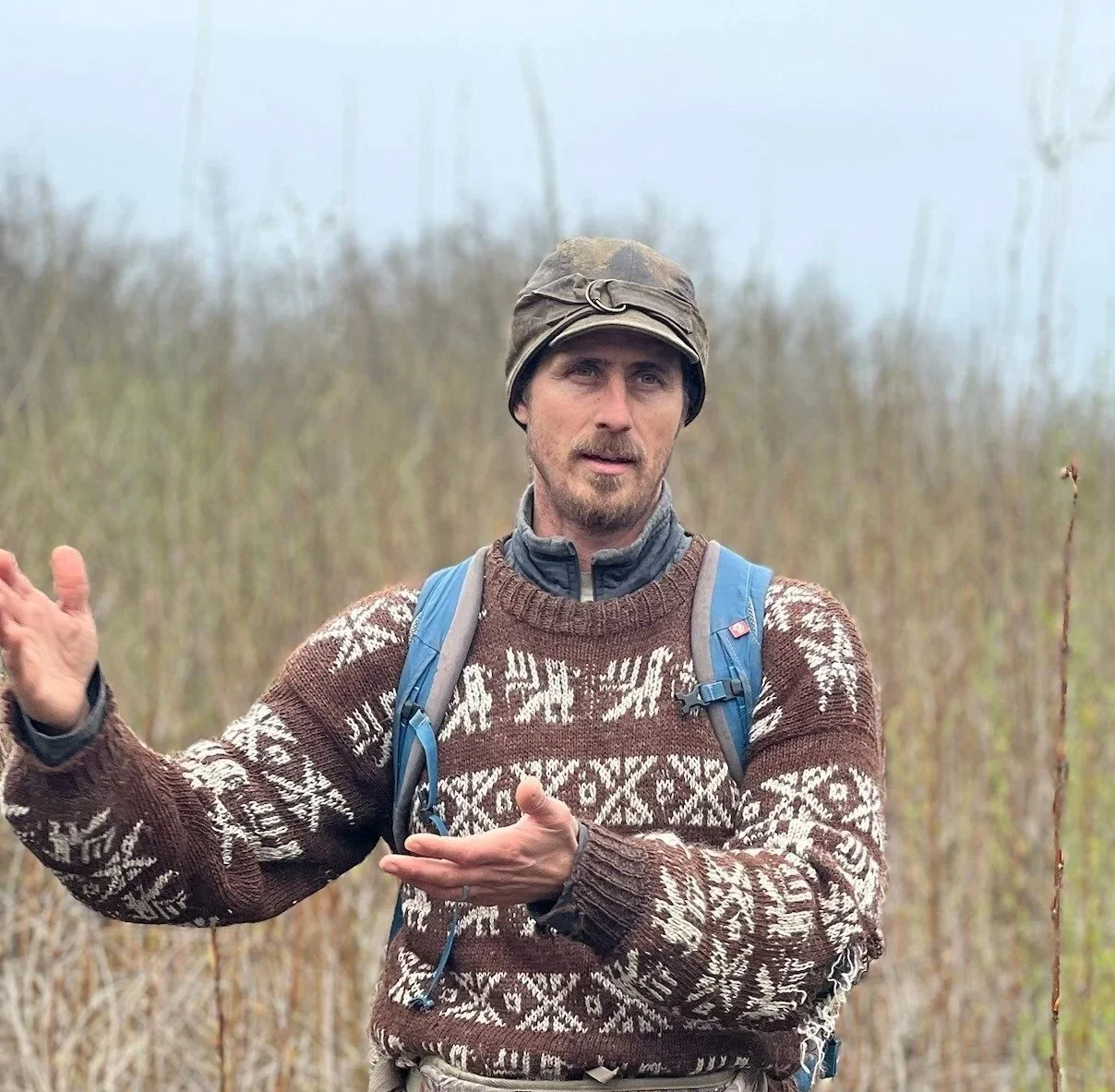
Wilderness Guide in Alaska & Montana
Environmental Restoration Project Manager
Environmental Educator
Co-owner of Blue Water GIS, a conservation-based GIS and mapping firm
CyberTracker Certified Track & Sign Specialist
CyberTracker Certified Trailing Professional
Committee Member of Tracker Certification North America
Avid bowhunter
Certifications & Experience
I started tracking animals over twenty years ago, and have been using those skills day in and day out ever since as a hunter, a birder, a naturalist, and a professional in the natural resources field. I’m certified at the highest level in Track & Sign interpretation, and over the past six years I’ve attained certifications in montane, desert, and temperate rainforest environments. I’ve also led and hosted numerous professional tracking workshops, field trips, and certifications for diverse audiences, and across varied ecosystems.
-
Guide - Led botany-based overnight trips in wilderness areas (MT/ID)
Project manager - Designed & implemented revegetation projects (upland, riparian, and wetland) (MT/ID)
Propagation manager - Propagated by seed, cutting, and grafting, and managed greenhouse and field growing at a nursery for fruit and native plants (WA)
-
Tracker
Certified Track & Sign Specialist
Certified Level III (99) in trailing
Certified Level II on Indigenous evaluation in Namibia
Certified in temperate rainforest, sage steppe, desert, and montane environments
5+ years of teaching tracking and assisting with tracking certifications
30+ years of hunting experience
20+ years of tracking experience, from Costa Rica to Alaska, and east to Africa
Mammals, birds, herps, invertebrates, nests, bones, etc
Bird language interpretation, birding by sight, and birding by track & sign
Kill site analysis
-
Revegetation
Cuttings, seeding, and planting (container and bareroot)
LTPBR (Low-Tech Process-Based Restoration)
Beaver Dam analogs, one-rock dams, weirs, etc
Invasive weeds
ID, ecology, and management plans
Vegetation management for wildlife
Why Cambium?
Cambium (let’s not get too technical here and just include phloem in the mix as well) is the nutrient rich layer between the wood and the bark of a woody plant. And cambium is a highly sought after resource — as a food source, insulative nesting material, and even a substrate for scent marking. It feeds and houses everything from beetles and voles, to grizzly bears and humans.
Cambium provides a great example of how plants and animals interact in complex and beautiful ways, and gives us a roadmap for reading the ecological stories left on the landscape.
Our logo shows the sign that bears leave after feeding on cambium of large trees.

“I’ve had the pleasure of working with Mark at Cambium Ecological as a co-teacher of educational events and trainings. As a mentor and educator, he is patient, communicates clearly, breaks down complex subjects so anyone can understand them, and inspires his students and event participants to strive to learn more every single time.
His passion and expertise in the natural sciences like biology, ecology, and wildlife cannot be overstated, and I am very lucky to have spent time in the field with him to see his skills and knowledge in action.”
Contact us
Interested in working together? Fill out some info and we will be in touch shortly. We can’t wait to hear from you!