
Who Cares About Cambium?
Turns out, lots and lots of animals do. Many animals utilize it in many different ways, and as trackers, we can often find the remnants of these behaviors…if we know what to look for.
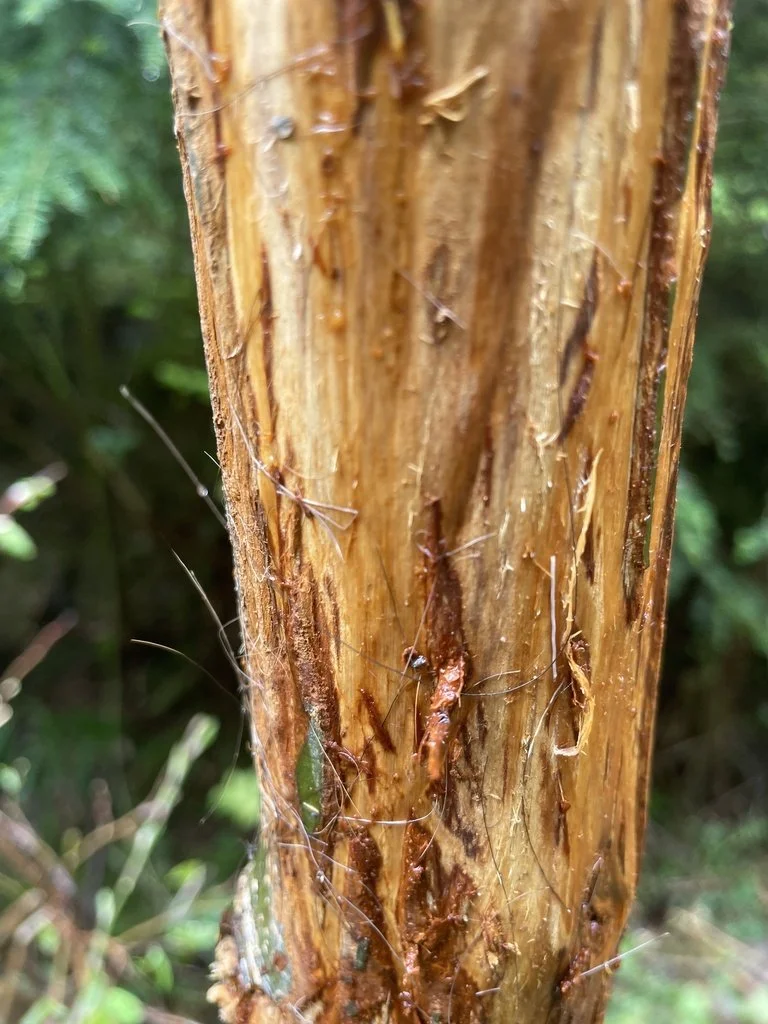
Elk scent post
The elk scrapes through the bark with incisors, and then rubs glands on its face and body over the newly exposed, sap-covered wood.
But first, let’s define what cambium actually is. As trackers and naturalists, we often talk of “cambium feeding” or “stripping cambium,” when actually what we’re talking about is “inner bark,” which for our conversation we can lump together as the cambium and the phloem. The cambium is a layer of tissue that is a mere one cell thick. It’s the layer that creates new wood (xylem) as it lays down new tissue towards the inside of the trunk, and it creates phloem as it lays down new tissue towards the outside. While the xylem transports water upwards, it is a very nutrient poor resource. Phloem on the other hand is the vascular system (imagine a bunch of straws that can transport liquid) that brings sugary sap downward from the leaves towards the roots.
So it’s here in the phloem that many of our animals are attracted to woody plants for food, fiber, and sap, and so when we say “cambium feeding” it’s really short hand for “phloem feeding where infinitely small amounts of cambium and maybe a bit of xylem get ingested incidentally.”
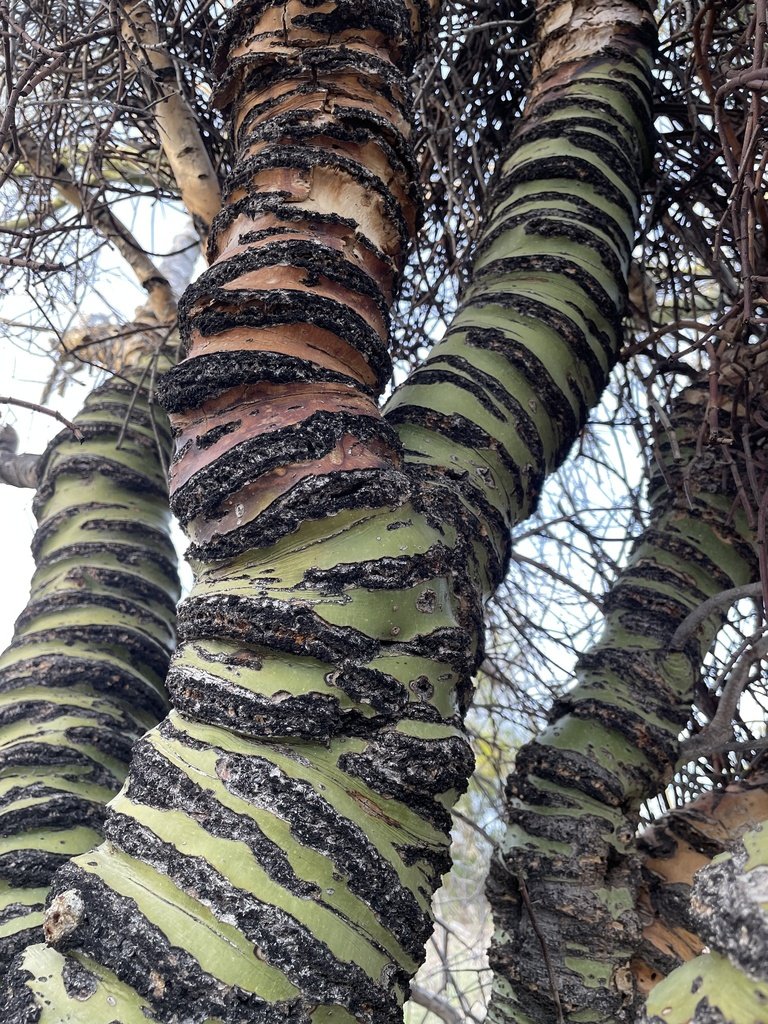
Sapsucker wells
Sapsuckers have drilled hundreds of wells into this Palo Verde tree. They feed on the sap as well as insects that get attracted to (and stuck in) the sap, but many other species take advantage of this newly available sugary resource as well.
So which animals use the “cambium” layer, and what exactly are they doing with it?
Many animals, from beetles to bears are feeding on the carbohydrate rich cambium. Seasonally it’s critically important as well, since sugars are often available in the cambium when leaves have fallen off the deciduous plants in the winter. Here’s a surely incomplete list of some of the animals that feed on cambium:
Deer, elk moose
Black bear and Grizzly bear
Sapsuckers (and then lots of other animals lap it up after sapsuckers open the bark, such as hummingbirds, which is a whole other amazing story for another day…)
Squirrels
Rabbits and hares
Woodrats
Voles
Beetles
And more animals, notably birds and rodents, use the fibrous, insulative strips of inner bark for nesting material.
And what better way to advertise yourself and your aromas than by smearing yourself with the sticky, odorous sap of the inner bark. Our ungulates and bears rub their horns, antlers, teeth and claws on trees to expose the sap, and bring the sticky substrate along with them to serve as a long lasting substrate for their scent to waft off their antlers and fur. And of course, they also famously deposit their own scent from various glands onto the rubbed tree as a way to mark trails and communicate with conspecifics.
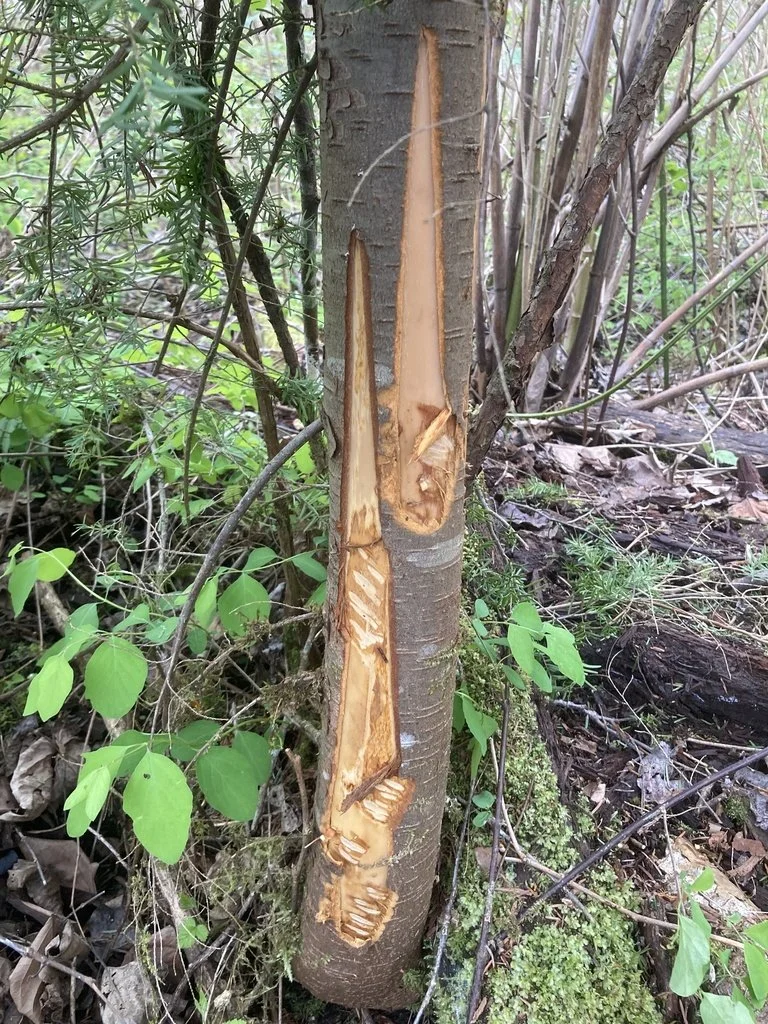
Black Bear cambium feeding
Bears strip off large swaths of bark upward, leaving a typical triangular taper, and then proceed to feed on the cambium by scraping it off with their incisors.
Ecologically, we can see that cambium is a critical resource for all sorts of animals, through many different seasons, as they use it for myriad ways to satisfy their needs.
And through a wildlife tracking lens, we can find the evidence of cambium use and start to tell the stories of which animals are present on a landscape and how they’re utilizing different plant resources at different times of the year. Whether for land management, hunting, or nature awareness, if you learn the signs of specific animals, cambium will become a recurring theme in your ecoliteracy toolkit.